Plotting Text Frequency and Distribution using R for Spinoza's A Theological-Political Treatise [Part I]
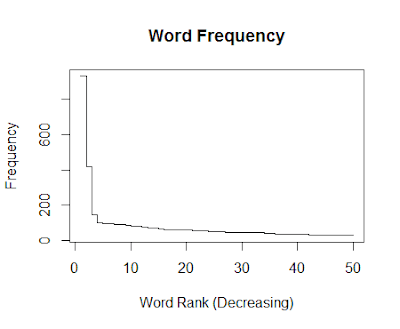
This was a little bit of fun, after reading a few more chapters of Text Analysis with R for Students of Literature . Spinoza is a current interest, as I am also reading Radical Enlightenment: Philosophy and the Making of Modernity 1650-1750 . Example Code (Common to Subsections) # Text for this can be acquired as below Project Gutenberg, as below # http://www.gutenberg.org/cache/epub/989/pg989.txt, # or via a Sample Data at the end of this post: textToRead = 'pg989.txt' # Text for this can be acquired via Matthew Jockers site, as below, # http://www.matthewjockers.net/macroanalysisbook/expanded-stopwords-list/, # or via a Sample Data at the end of this post: exclusionFile = 'StopList_Extended.csv' # Read Text text.scan <- scan(file = textToRead, what = 'char') text.scan <- tolower(text.scan) # Create list text.list <- strsplit(text.scan, '\\W+', perl = TRUE) text.vector <- unlist(text.list) # Create ...