Posts

Showing posts with the label azure

Cultural Dimensions and Coffee Consumption

Image
Photo by Viktoria Alipatova from Pexels Responding to a Treehugger article, Why Americans will never love tea as much as coffee , I initially wrote my personal preferences for tea and coffee , ending with, BTW, this has just given me an idea for comparing Hofstede's cultural dimensions and coffee and tea consumption. Afterward, I did some analysis in Excel, then ran the same processes in R using Visual Studio, then converted that to a Jupyter Notebook on Microsoft's Azure Notebooks . Although this analysis is limited to 45 countries that have Hofstede's Cultural Dimensions , as well as per capita consumption for both coffee and tea, it would seem that coffee consumption correlates with power distance, individuality, and masculinity. Tea had small correlations with the dimensions and sometimes in the same direction as coffee. A fuller analysis is available on Microsoft's Azure Notebook , but some quick findings: Higher power distance, lower coffee consumption...

Calculating Value at Risk (VaR) with Python or R

Image
The following modules linked below are based on a Pluralsight course, Understanding and Applying Financial Risk Modeling Techniques , and while the code itself is nearly verbatim, this is mostly for my own development, working through the peculiarities of Value at Risk (VaR) in both R and Python, and adding commentary as needed. The general outline of this process is as follows: Load and clean Data Calculate returns Calculate historical variance Calculate systemic, idiosyncratic, and total variance Develop a range of stress variants, e.g. scenario-based possibilities Calculate VaR as the worst case loss in a period for a particular probability The modules: In R: Financial Risk - Calculating Value At Risk (VaR) with R In Python: Financial Risk - Calculating Value At Risk (VaR) with Python

Microsoft Azure Notebooks - Live code - F#, R, and Python

I was exploring Jupyter notebooks , that combines live code, markdown and data, through Microsoft's implementation, known as MS Azure Notebooks , putting together a small library of R and F# notebooks . As Microsoft's FAQ for the service describes it as : ...a multi-lingual REPL on steroids. This is a free service that provides Jupyter notebooks along with supporting packages for R, Python and F# as a service. This means you can just login and get going since no installation/setup is necessary. Typical usage includes schools/instruction, giving webinars, learning languages, sharing ideas, etc. Feel free to clone and comment... In R Azure Workbook for R - Memoisation and Vectorization Charting Correlation Matrices in R In F# Charnownes Constant in FSharp.ipynb Project Euler - Problems 18 and 67 - FSharp using Dynamic Programming

Neural Networks (Part 4 of 4) - R Packages and Resources

Image
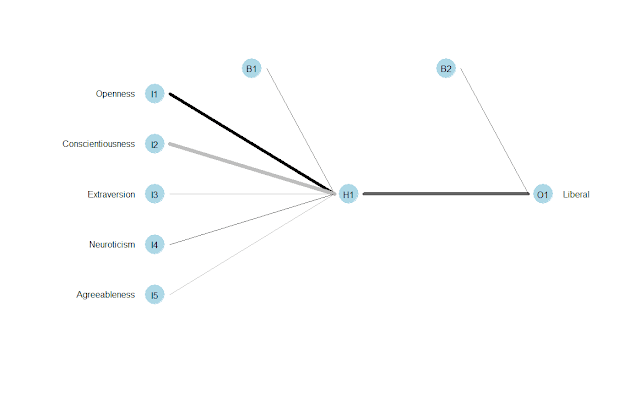
While developing these demonstrations in logistic regression and neural networks, I used and discovered some interesting methods and techniques: Better Methods A few useful commands and packages...: update.packages() for updating installed packages in one easy action as.formula() for creating a formula that I can reuse and update in one action across all my code sections View() for looking at data frames fourfoldplot() for plotting confusion matrices neuralnet for developing neural networks caret , used with nnet , to create predictive model plotnet() in NeuralNetTools, for creating attractive neural network models Resources that I used or that I would like to explore... MS Azure Notebooks , for working online with Python, R, and F#, all part of MS's data workflows Efficient R Programming , that seems to have many good tips on working with R Data Mining Algorithms in SSAS, Excel, and R , showing various algorithms in each technology R Documentation , a ...